


In 3 seconds, would you be able to tell me how many times the number 6.53 appears in the following table?
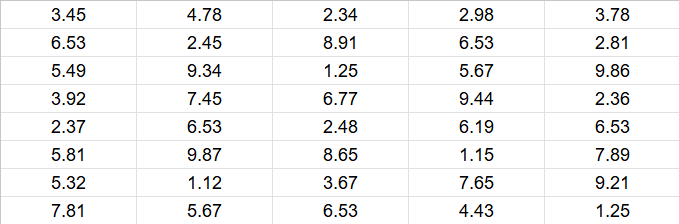
It would probably be a difficult task.
Now, if I were to give you the same task using the following table, would you be able to give me a more accurate answer?
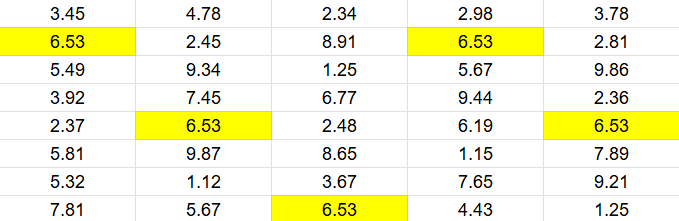
That is because of the use of color, which is a pre-attentive attribute.
Last week my cohort and I learned the basics of a good visualization. An important factor to consider is ensuring your visualization is understood quickly. This is where pre-attentive and attentive processing comes into play.
You can define pre-attentive and attentive processing as follows:
Pre-attentive processing- the subconscious automatic intake of information (usually happens very quickly).
Attentive processing- the conscious effort to understand information.
These processes are simply how our brain interprets our surroundings. Pre-attentive attributes are the characteristics that enable pre-attentive processing.
Here is a list of pre-attentive attributes:
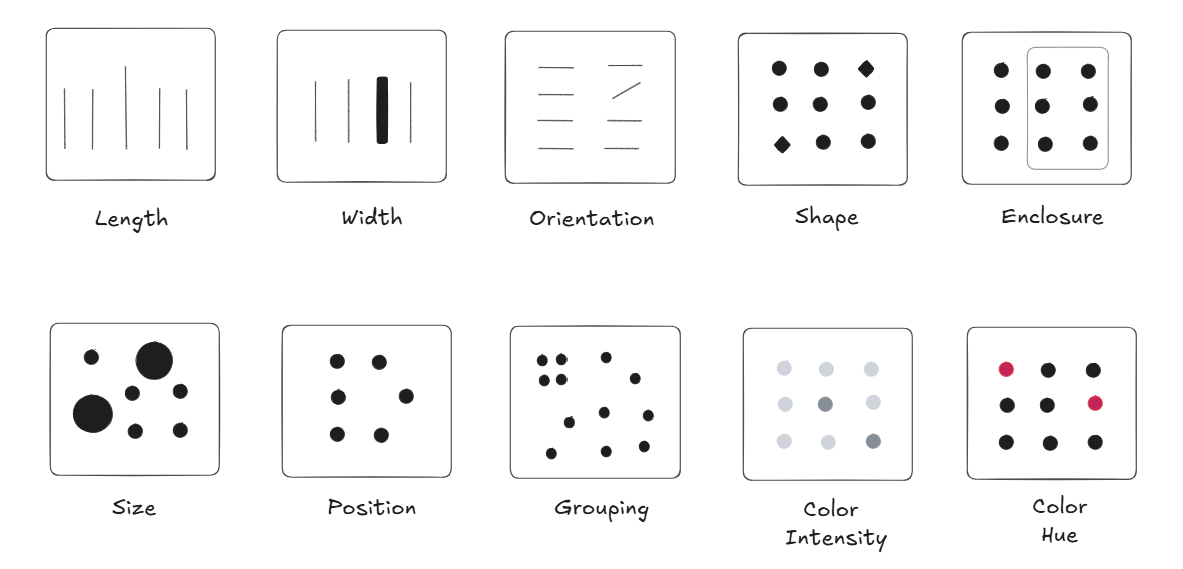
With that in mind, let’s see this is practice. Let us take this bubble chart for example:
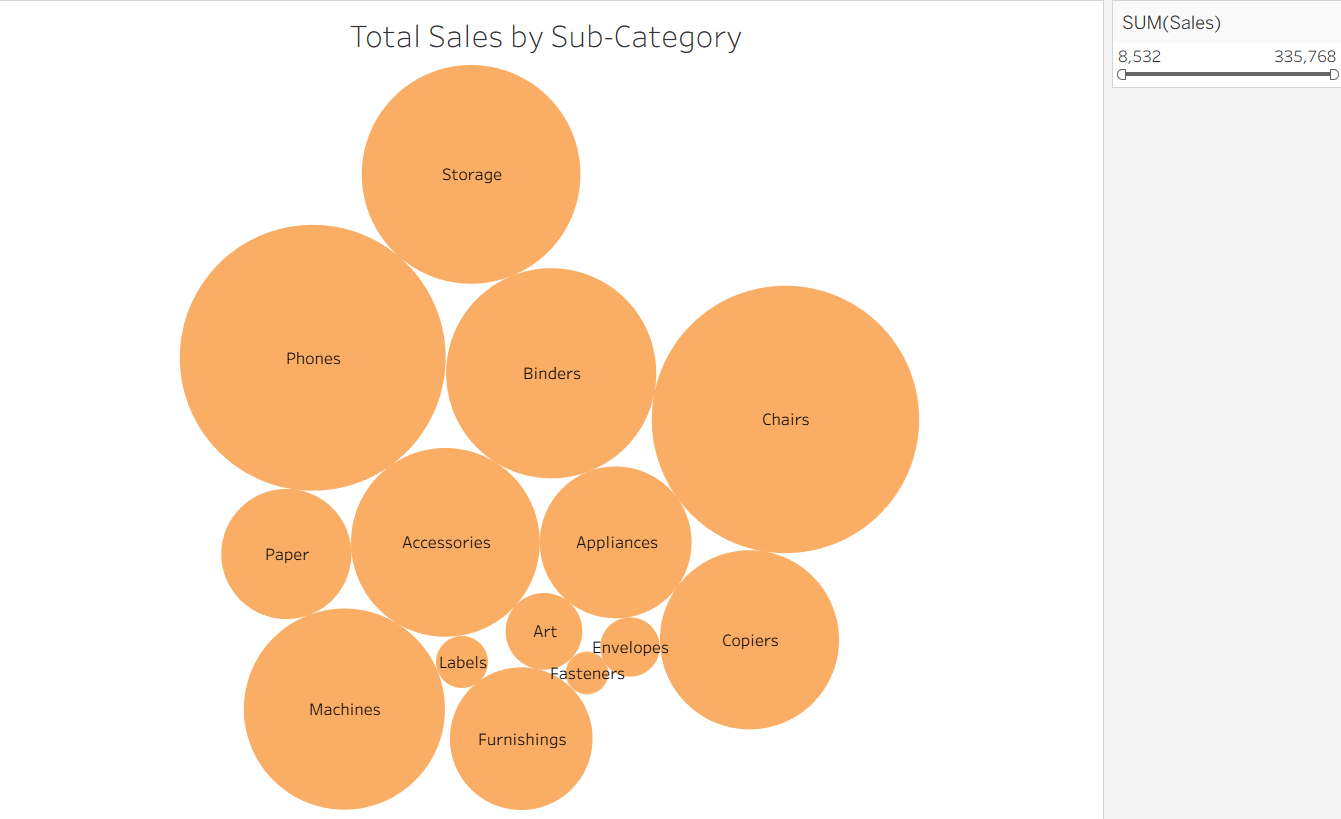
In this bubble chart, the pre-attentive attribute, size, enables us to identify which sub-category generates the most sales. The larger bubbles stand out, easily drawing attention to information that may be considered important.
Keep these attributes in mind when building your next visualization. However, it is important to note that too much of one attribute is not always beneficial. For instance, too many pre-attentive attributes can make your dashboard look cluttered, and some best practices include avoiding an excess of color or shapes. A balanced use of these attributes, however, can take your visualization to the next level.